
 By
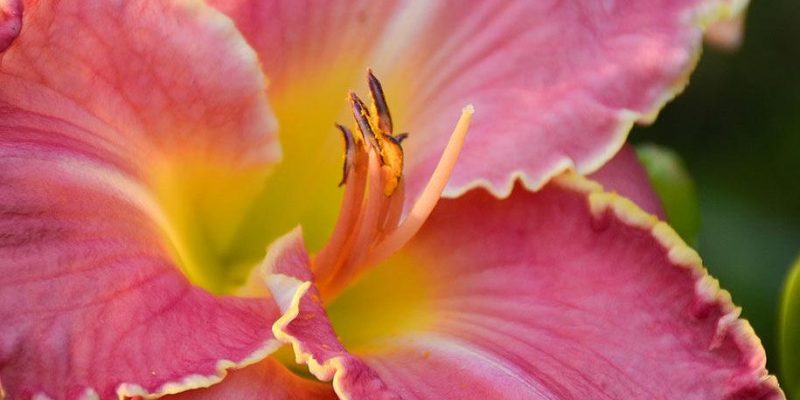
Pink daylilies are often treated as a soft option in ornamental planting, something pleasant but secondary to louder colours or more unusual forms. Specialists tend to see them differently. The best pink strains solve several design problems at once. They sit comfortably with brick, stone, weathered timber and the greys and greens that dominate many British gardens. They can cool a border that feels too hot in midsummer, bridge difficult colour transitions, and bring a more measured look to mixed planting without becoming dull. That combination of usefulness and beauty explains why experienced growers, collectors and garden designers keep returning to them.
There is also a practical reason for their enduring appeal. Daylilies are resilient perennials with a long history of rewarding ordinary garden care. Within that broad group, pink selections have improved sharply over the years. Breeders have worked on stronger colour clarity, better substance, more reliable repeat flowering, and flowers that hold themselves well through variable summer weather. As a result, pink is no longer a compromise shade. In the best strains, it is one of the most versatile and technically successful colour groups available to gardeners.
Professional advice reflects that shift. A commentary from the premier grower of daylily plants SwallowtailDaylilies puts it plainly: when customers ask for a dependable colour group that combines garden performance with broad design value, pink is often the most sensible recommendation. Buyers looking through pink daylilies plants for sale are usually responding to more than colour alone; they are choosing plants that can work across different border styles, pair well with many companion plants, and maintain a refined appearance over a long season.
That practical strength is what keeps specialists interested. Pink daylilies are not simply attractive flowers. At their best, they are well-made garden plants with a distinct role in serious planting schemes, private collections and small commercial displays.
Why pink works so well in modern ornamental planting
The success of pink daylilies starts with their flexibility in the garden. In colour theory, pink occupies useful middle ground. It can soften stronger tones such as scarlet, orange and deep purple, but it can also sit beside silver foliage, blue-flowered perennials, cream roses and white umbels without looking weak. That makes pink one of the easiest ways to stabilise a mixed border. Where many colours compete for attention, pink often restores order.
This matters in British gardens, where planting is frequently viewed from changing angles, under changing light and through long seasonal transitions rather than in a single formal display. A plant may need to look right near pale gravel, red brick, old paving or timber fencing. Strong yellows and oranges can be effective, but they are less forgiving in these situations. Good pink strains absorb those variables more calmly. In morning light they can look fresh and clean; in evening light they gain warmth. During overcast periods, which are hardly rare in Britain, the better pinks retain enough body to avoid appearing washed out.
Pink daylilies also respond well to current planting preferences. Many contemporary ornamental gardens favour layered combinations rather than isolated specimens. Designers often want plants that can repeat through a border, linking one area to another without making the scheme feel repetitive. Pink daylilies suit that method because the colour is recognisable but not overbearing. A drift of strong rose pink can create rhythm, while softer shell pinks can act almost as a neutral.
Another reason specialists return to them is that pink exposes quality. A poor pink daylily can look muddy, inconsistent or thin in substance. A good one shows the opposite: clean pigmentation, disciplined form, balanced petal width and a flower that opens properly. Because the colour is less blunt than yellow or red, it reveals refinements in breeding more clearly. For collectors and judges, that makes pink an interesting category rather than an easy one. The best strains demonstrate technical improvement in a way that experts notice immediately.
In short, pink succeeds because it answers both aesthetic and practical needs. It is gentle without being insipid, adaptable without being vague, and refined without becoming difficult to use.
The breeding improvements that changed expert opinion
Specialists did not always view pink daylilies with equal enthusiasm. Earlier strains could be charming, but they often lacked consistency. Some faded too quickly in strong sun. Others opened poorly on cool mornings or produced flowers with weak texture that collapsed before the day was done. In wetter conditions, petals could mark easily. There were attractive plants, certainly, but the colour group as a whole was uneven.
Breeding changed that picture. Modern pink daylily improvement has focused on far more than surface colour. Breeders selected for stronger scapes, better bud count, branching that extended the display period, and flowers with greater substance. The result is a new standard of performance. A specialist choosing today’s better strains can expect cleaner presentation and more reliable flowering than was common in the past.
Colour development has been especially important. Pink is not a single tone but a broad range that includes shell, blush, salmon-pink, clear rose, cool lavender-pink and stronger near-magenta shades. Breeders have worked to separate and refine these colours so that flowers appear deliberate rather than muddled. That is one reason experienced growers often speak of “strains” or “lines” rather than just pink daylilies in general. Certain breeding lines hold colour better, show clearer throats, or combine contrasting eyes and edges more effectively.
Form has improved as well. Specialists are drawn to pink cultivars that do not rely on colour alone. They look for flowers with good proportion, a clean face, and petals that present the bloom properly from a standing viewing height. In some modern introductions, ruffling and edge detail are used with more restraint than before, allowing the flower to read clearly in the garden rather than only on a show bench or in a catalogue photograph.
There is also greater attention to garden stamina. The best modern pinks are not merely attractive on a single day; they build a convincing display over weeks. Repeat flowering has become more important, particularly for gardeners who want strong midsummer performance followed by a second flush. In Britain, where the growing season can be generous but weather can turn abruptly, that repeat capacity adds real value.
For specialists, these breeding improvements justify repeated attention. Returning to the best pink strains is not about habit or nostalgia. It is a response to genuine progress in plant quality.
Performance in British conditions and what experts watch for
British gardeners do not need a plant that looks perfect only in ideal weather. They need one that performs in mixed conditions: warm spells, wet intervals, wind, variable soils and the irregular light of a maritime climate. Pink daylilies have earned specialist loyalty because the strongest strains handle this range better than many assume.
Drainage remains important, as daylilies generally dislike winter waterlogging, but once established they are robust plants. They tolerate summer dryness better than many herbaceous perennials, though flowering is improved by steady moisture during active growth. In much of Britain, that balance can be managed without difficulty. Where soils are heavy, specialists usually improve structure first rather than blaming the plant. When given a fair start, good daylilies settle quickly and form reliable clumps.
Experts also watch how pink flowers behave under different light conditions. A pink that looks excellent in a hot, dry climate may not always translate perfectly to Britain, and the reverse is also true. In this country, clear colour under soft light is a major strength. The best strains keep their definition on overcast days and resist becoming dull after rain. Petal substance matters here. Thicker petals usually withstand weather better, while flowers with good opening habits remain presentable even after cool nights.
Scape height and habit are equally important. Specialists favour pink selections that sit well in the border and do not sprawl awkwardly through neighbouring plants. A well-positioned flower just above tidy foliage is often more valuable than an excessively tall stem that looks impressive in isolation but disruptive in mixed planting. Good foliage is another point experts do not ignore. Since daylilies occupy ground for a long season, the leaves must remain reasonably clean and upright to support the border visually even when individual flowers have passed.
Disease and pest issues are usually manageable, but strain choice still matters. Vigorous, well-bred plants tend to recover more quickly from stress and maintain better flowering. That is one reason serious gardeners often search beyond general retail stock and pay attention to specialist sources when reviewing pink daylilies plants for sale. They are not merely buying a colour. They are selecting a plant with proven structure, flowering habit and garden reliability.
This performance-based view explains why experts come back to pink again and again. In a British setting, the best strains are not delicate luxuries. They are dependable working plants with decorative strength.
How specialists use pink daylilies in design schemes
One reason pink daylilies maintain expert interest is that they can be used in more ways than many gardeners realise. They are not limited to cottage-style borders or sentimental planting. In capable hands, they move comfortably across formal, informal and contemporary settings.
In traditional mixed borders, pink daylilies often act as a linking plant. They can join roses to later-flowering perennials without creating a visual break, especially where the border moves from early summer softness into richer midsummer colour. Their strappy foliage also contrasts usefully with rounded shrubs, airy umbellifers and the vertical lines of grasses. A well-chosen pink daylily can therefore contribute structure as well as flower colour.
In more modern schemes, the role changes slightly. Here, specialists often use repetition and spacing more deliberately. A limited group of pink strains repeated through gravel gardens, prairie-inspired borders or pared-back perennial planting can create continuity without obvious uniformity. Because pink shades vary so widely, the planting can remain subtle even when one colour family dominates. Dusty pinks may work with bronze fennel and pale grasses, while cleaner rose tones can sit beside blue salvias and purple verbenas.
Pink daylilies are also useful in gardens where the owner wants ornament without fuss. Specialists know that some of the most successful gardens are not the most complex; they are the ones where plants earn their place. Pink daylilies do that when they are positioned with care. Near seating areas, they provide repeated daily interest through the opening of fresh flowers. Along paths, they read clearly without becoming visually aggressive. Around pale stone or rendered walls, they soften hard surfaces while retaining enough definition to be seen from a distance.
Experts are often cautious about overcomplicated combinations, and pink supports that caution. It allows a border to be rich without becoming noisy. One of the common mistakes in ornamental planting is assuming that impact depends on stronger and stronger colour contrast. In reality, many high-level plantings depend on control. Pink helps provide that control. It creates progression, moderation and visual rest.
That ability to serve both display and discipline is rare. It is one of the key reasons specialists continue to revisit the best pink daylily strains when planning serious garden compositions.
Choosing better strains and avoiding common mistakes
A specialist’s enthusiasm for pink daylilies does not mean every pink cultivar deserves equal attention. The difference between an average plant and an excellent one can be substantial, which is why experienced growers tend to select carefully rather than buy broadly.
The first point is clarity of purpose. Gardeners should ask what the plant needs to do. Is it intended as a repeating border perennial, a collector’s specimen, or part of a softer planting scheme around shrubs and roses? Strong rose pinks with a defined eye may carry more visual weight and suit bolder compositions. Pale shell pinks can be more effective in refined planting, especially where they need to harmonise rather than dominate. Experts rarely choose by catalogue image alone; they think about scale, spacing and context.
The second point is performance history. Specialists favour strains known for consistent flowering, sensible branching and good garden habit. A flower can look impressive in a close photograph but still fail as a landscape plant if the scapes are weak or the foliage untidy. Reliable specialist nurseries are valuable precisely because they filter introductions through real growing conditions instead of novelty alone.
Another common mistake is treating pink as interchangeable. It is not. Cool pink and warm pink behave differently in planting design. A cool lavender-pink may look refined beside silver foliage but awkward near apricot roses. A warmer salmon-pink can blend beautifully with terracotta, bronze and muted red, yet feel misplaced among sharper blue tones. Specialists return to certain strains because they know exactly how each behaves in use.
Planting position matters too. Daylilies usually flower best with generous light, though in hotter spots some pinks benefit from slight protection during the fiercest part of the day. Overcrowding is another avoidable error. Clumps need room to develop and should not be buried under more assertive neighbours. Good air movement and clean soil preparation improve both appearance and longevity.
Finally, experts understand the value of patience. Daylilies often improve after establishment, producing better scapes and fuller clumps in subsequent seasons. A careful choice at the start pays off over years, not weeks. That long-view approach is central to specialist gardening, and it suits pink daylilies particularly well. Their real strength is cumulative: dependable growth, repeated flowering and a continuing ability to fit the garden as it matures.
Why the best pink strains retain their place year after year
Specialists return to pink daylilies because the best strains keep proving their worth. That is the simplest explanation, and also the most convincing one. They offer a combination that is harder to find than it first appears: restrained beauty, technical improvement through breeding, dependable garden performance and unusual versatility in design.
In ornamental horticulture, fashion changes quickly. New colours emerge, unusual forms attract attention, and dramatic introductions often receive more publicity than they deserve. Yet the plants that remain in serious use are usually those that combine pleasure with function. Pink daylilies belong in that category. They can hold their own in a collector’s border, but they are just as effective in a practical domestic garden where every plant must justify the space it occupies.
Their appeal is not sentimental and not merely commercial. Specialists return to them because pink has become one of the most successful ways to express what modern daylily breeding can do. It reveals subtlety, exposes quality and performs across a wide range of planting styles. In British conditions, that matters. Gardens here often depend on nuance rather than extremes, on combinations that work in shifting weather and under moderate light. The best pink strains answer that need remarkably well.
They also reward repeated viewing. A good pink daylily is rarely crude. Its value emerges in proportion, tone, branching, stamina and compatibility with surrounding plants. These are the qualities specialists notice and remember. Over time, they matter more than novelty.
That is why experts keep returning to the best pink daylily strains. They are not chasing a passing colour preference. They are choosing a plant group that has matured into one of the most useful, refined and reliable elements in the ornamental garden.










Comments