
 By
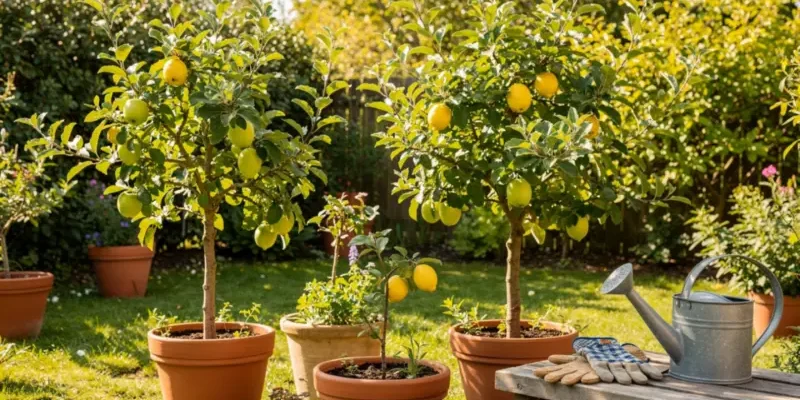
A family garden has to work hard. It may need space for children, pets, seating, washing lines, summer meals, storage, and planting that looks good without demanding constant attention. A fruit tree can fit beautifully into that mix, but only if it is chosen with the whole household in mind.
The common mistakes are rarely dramatic. They are small misjudgements that become larger over time: planting too close to a path, choosing a tree that grows beyond its space, forgetting pollination, or selecting fruit that nobody is excited to use. Avoiding those errors makes the tree easier to enjoy from the start.
For households ready to buy fruit trees, the fruit tree specialists at Fruit-Trees recommend thinking about daily use of the garden as carefully as variety choice. A tree should not block play, shade the only sunny seat, drop fruit where people constantly walk, or require a level of pruning that the family cannot realistically maintain.
This guide looks at the mistakes most likely to affect ordinary family gardens in Britain. It is not about discouraging ambition, but about choosing fruit trees that become part of family life rather than another chore competing for weekend time.
The family garden perspective is deliberately practical. It assumes the tree must share space with real household activity and that maintenance time may be uneven. A good choice should make the garden more enjoyable, not introduce a permanent source of conflict. The right tree can offer beauty and harvest while still leaving room for everyday life.
A further advantage of this approach is that it keeps the decision grounded in family routines. A tree may be horticulturally suitable but still wrong if nobody has time to water it, prune it, or gather the crop. Matching care to real life is not a compromise; it is the reason the tree is likely to succeed.
Mistake One: Ignoring Mature Size
Young fruit trees can make mature size feel theoretical. They arrive as slim plants, often easy to carry and quick to position. Yet their future spread matters from the first day. A tree planted too close to a fence, shed, trampoline, path, or seating area may quickly become awkward even if it remains healthy.
Rootstock information helps prevent this problem. It gives a better indication of eventual vigour than the young tree’s appearance. A dwarfing rootstock may suit a small lawn or border edge, while a more vigorous rootstock may be right for a larger garden where the tree can develop naturally. The key is to choose for the garden’s real scale.
Families should also consider movement around the tree. Children may run beneath branches, adults may need to mow or carry garden furniture, and everyone needs access for picking. A tree that technically fits but constantly gets in the way will feel like a mistake. Allowing space around it keeps the garden easier to live in.
Mature size should include root spread and shade, not only branch height. A tree may be pruned to stay compact, but its roots still need a reasonable zone free from constant disturbance. Planting beside a sandpit, raised bed, or regularly dug border can create conflict later. Shade also moves as the tree grows, changing the way a lawn, seating area, or play space feels. Family gardens change over time, so the tree should be placed where it can remain useful as children, habits, and outdoor furniture all shift.
Mature size should be discussed before planting if several people use the garden. A tree that suits one person’s ideal layout may interfere with another person’s daily route or play area.
Mistake Two: Choosing Fruit Nobody Will Use
A beautiful tree is still a poor family choice if the crop goes unwanted. Some households love cooking apples, while others prefer sweet dessert fruit. Some will preserve plums, make quince jelly, or bake pears. Others want fruit that can be eaten straight from the tree by children. The best variety is the one that suits the way the family actually eats.
Season matters too. A variety that ripens while the family is usually away on holiday may be less useful than one that crops earlier or later. Fruit that stores well can be valuable for busy households, while soft fruiting types may need prompt picking and use. A crop should arrive at a time when it can be enjoyed rather than wasted.
It is worth involving the household in the choice. Children may be more interested in a tree they helped select, and adults are more likely to care for a tree whose harvest fits the kitchen. The aim is not to make the choice complicated, but to make sure the fruit has a clear purpose.
Fruit preference can be tested by thinking about a heavy crop year. If the tree produced several bowls of fruit at once, would the family know what to do with it? Dessert fruit, cooking fruit, preserving fruit, and storage fruit all create different household routines. A variety that sounds impressive may be less valuable than one that fits lunch boxes, crumbles, sauces, or weekend baking. This practical kitchen thinking keeps the tree connected to real use. It also reduces waste, which is one of the quiet frustrations of poor variety choice.
The most useful fruit is often the one that disappears happily into ordinary meals. A variety that suits breakfast, snacks, baking, or Sunday cooking will earn affection faster than a novelty crop.
Mistake Three: Forgetting Pollination Until Blossom Appears
Pollination can feel like a technical detail until the tree flowers beautifully and sets very little fruit. Many family gardens have room for only one or two trees, so the question of self fertility and compatible partners matters. A single tree may crop well if it is self fertile or if suitable pollinators are nearby, but this should not be left to luck.
Neighbouring gardens can help, especially in older residential areas where apples and pears are common. However, the gardener may not know the variety, flowering time, or health of those trees. If reliable crops are important, it is better to choose a self fertile variety or plant compatible trees where space allows.
Pollination planning is also useful for teaching children about the garden. Blossom, bees, weather, and fruit set become easier to understand when the tree has been chosen thoughtfully. A productive tree can become part of the family’s seasonal awareness rather than a mysterious plant that sometimes performs and sometimes does not.
Pollination planning can be made easier by choosing varieties with a track record in ordinary gardens. Some gardeners are drawn to rare or unusual fruits, which can be rewarding, but a first family tree should usually be dependable. Once confidence grows, more specialist choices become easier to manage. A reliable first tree teaches the family about blossom, bees, pruning, and harvest without adding unnecessary uncertainty. It is better to build enthusiasm through success than to begin with a tree that needs unusually careful conditions.
If pollination sounds confusing, families can simplify the decision by choosing self fertile varieties or clearly compatible pairs. Straightforward planning is often better than hoping nearby gardens will help.
Mistake Four: Planting Where the Garden Is Busiest
The most visible spot is not always the best planting spot. A tree in the centre of a small lawn may look attractive at first, but it can interfere with play, mowing, and temporary garden uses. A tree too close to a patio may drop fruit where people sit or walk. Good placement balances visibility with practicality.
Edges often work well, provided there is enough light and access. A tree can soften a boundary, frame a view, or anchor a border without occupying the middle of the garden. Trained forms can make especially good use of fences and walls, turning a boundary into a productive surface.
Safety and convenience should be considered without becoming overcautious. Thorny or brittle growth, low branches across paths, and fruit falling on hard paving can all become annoyances. Thoughtful placement reduces those issues and makes the tree feel like a natural part of the family garden.
Placement should also account for mess without exaggerating it. Fallen fruit is part of growing fruit trees, but it becomes more annoying in some positions than others. Soft fruit dropping onto a main path, patio, or artificial lawn can quickly become a chore. Fruit falling into a border or onto grass is usually easier to manage. The tree’s crop timing matters here too, because busy late-summer weeks may leave less time for clearing windfalls. A sensible position keeps ordinary maintenance from becoming a household complaint.
A good position can also reduce arguments over mess and maintenance. Fruit that drops where it can be collected easily is much less troublesome than fruit falling into awkward corners.
Mistake Five: Underestimating First-Year Care
Families are often busiest during the same months when new trees need attention. Spring and summer bring school events, holidays, work, and general garden growth. A newly planted fruit tree can be forgotten because it looks settled once it leafs out. In reality, its roots are still limited and it may need regular watering during dry spells.
A simple routine helps. Checking soil moisture, keeping grass away from the base, refreshing mulch, and inspecting ties take little time when done regularly. These tasks are much easier than rescuing a stressed tree after drought, wind rock, or weed competition has already caused damage.
The right tree also reduces pressure. A container tree may suit a patio, but it will need more watering than one in open ground. A trained tree may look tidy, but it needs timely pruning. A family should choose the form that fits its habits, because good intentions are not the same as regular care.
First-year care can be shared if the routine is simple. One person may check watering, another may notice damaged ties, and children can help watch for blossom or fruit swelling. The tree becomes easier to care for when it is part of family attention rather than one gardener’s private responsibility. Clear, visible cues help: a mulched circle, a stake, a label, and a watering point nearby all remind people that the tree is still establishing. Practical design can support good habits.
First-year care should be realistic during holidays. If the family is often away in summer, open-ground planting or a watering plan may be safer than a container that dries quickly.
Mistake Six: Expecting Instant Abundance
Fruit trees ask for patience. A young tree may produce a small crop early, but heavy cropping is not always desirable before the framework is established. Families sometimes expect a tree to behave like an annual vegetable crop, giving a strong return immediately. Trees work on a longer timescale.
That timescale can be part of the pleasure. Children can watch blossom, new growth, fruit swelling, leaf colour, and winter shape. The tree becomes a marker of seasons and family years. A modest first crop can still feel exciting when it has been watched from bud to harvest.
The best family fruit tree is therefore chosen for long-term fit, not instant novelty. It suits the garden’s size, the household’s routine, the kitchen’s preferences, and the care available. Avoiding the obvious mistakes leaves room for the enjoyable part: a tree that grows with the family and keeps giving reasons to step outside.
Expectations should also include light-crop years. Even established trees can crop differently depending on weather, pruning, and blossom conditions. Families who understand this are less likely to lose interest after one disappointing season. A fruit tree is not a machine; it is a long-lived plant responding to a changing garden. That variability can be part of its educational value. It shows children and adults alike that food has seasons, risks, and rewards, which is one of the deeper pleasures of growing it at home.
When expectations are patient, the tree can become part of family memory. First blossom, first fruit, and changing autumn leaves all matter before the tree reaches full productivity.










Comments